Silverfish control in Los Angeles

Silverfish are small, fast, wingless insects that live where it’s damp and dark — bathrooms, under sinks, closets, garages and boxes of stored paper. They don’t bite or spread disease, but they feed on paper, book bindings, wallpaper paste and some fabrics, and a steady supply of them usually points to a moisture problem worth fixing.
  • Harmless to people, but damage paper and fabric
  • Usually a sign of humidity or a leak
  • Treatment targets voids, cracks and storage areas
  • Drying things out keeps them from coming back
Call (844) 459-9482
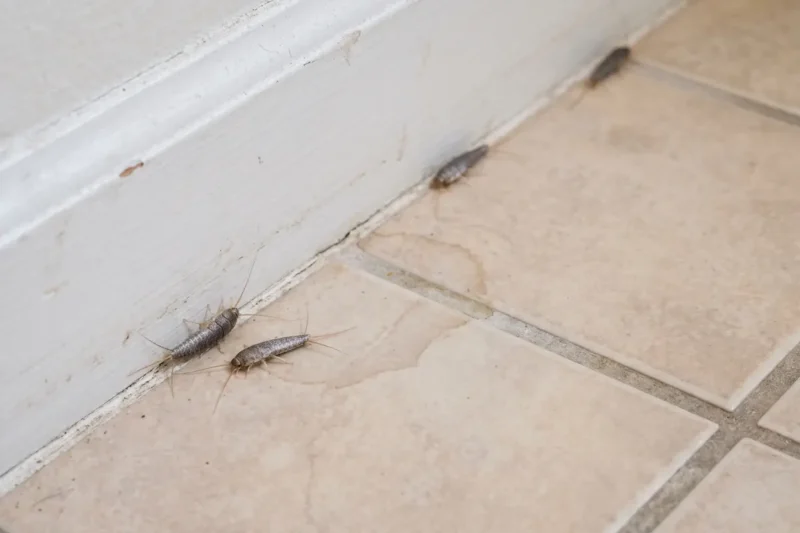
Silverfish along a baseboard on a tiled bathroom floor

Silverfish and firebrats

  • Silverfish are up to about half an inch long, silvery-gray and carrot-shaped, with long antennae and three thin “tails.” They move in quick, fish-like wiggles and prefer cool, humid places.
  • Firebrats look similar but are mottled brown-gray and prefer warm spots — near water heaters, furnaces, dryer vents and hot attics.

Both are active at night and hide by day in cracks, wall voids, behind baseboards and inside stored boxes. They can live for years, so a small problem can build up slowly.

Signs of silverfish

  • Silverfish trapped in sinks or bathtubs, where they can’t climb the smooth sides.
  • Irregular holes, notches or surface grazing on paper, book covers, photos, cardboard and wallpaper.
  • Yellowish stains, tiny pepper-like droppings or shed scales in drawers, shelves and boxes.
  • Damage to starched or natural fabrics — cotton, linen, rayon — in closets and storage.

What attracts them in Los Angeles homes

  • Bathroom humidity. Showers without a working exhaust fan, slow leaks under sinks and around tubs.
  • Older plumbing and roofs. Leaks inside walls, around water heaters and under roof valleys keep framing and insulation damp.
  • Crawlspaces and garages. Raised-foundation homes with damp soil underneath, and garages full of cardboard boxes.
  • Paper and starch. Stacks of books, magazines, files and stored clothing give them food and shelter.

Coastal neighborhoods with morning fog and humid summers tend to see more silverfish than drier inland areas, but any house with a leak can have them.

How silverfish control works

  1. Inspection of bathrooms, under sinks, closets, garage storage, attic and crawlspace, with attention to leaks and humidity.
  2. Identification — silverfish or firebrats — since the hiding places differ.
  3. Targeted treatment of cracks, wall voids, baseboards and storage areas using products labeled for silverfish, such as dusts in voids and crack-and-crevice applications. No fogging of living areas.
  4. Moisture recommendations — fix leaks, improve ventilation, dry out crawlspaces.
  5. Follow-up to confirm activity has dropped; ongoing problems can be folded into recurring service.

Moisture can mean more than silverfish. Damp wood and leaks also attract cockroaches and can support subterranean termites. If the inspection finds wet or damaged wood, ask about a termite inspection too.

Preventing silverfish

  • Run the bathroom fan during and after showers; fix fans that don’t vent outside.
  • Repair dripping faucets and leaks under sinks, around tubs and at the water heater.
  • Use a dehumidifier in damp basements, closets or storage rooms.
  • Store papers, photos and seasonal clothes in sealed plastic bins instead of cardboard.
  • Reduce stacks of old newspapers, magazines and boxes in garages and closets.
  • Caulk gaps along baseboards, around pipes and in bathroom tile.

More background on silverfish and firebrats is available from UC Statewide IPM.

Frequently asked questions

Are silverfish harmful?

Not to people or pets — they don't bite, sting or spread disease. The concern is damage to books, papers, photos, wallpaper and some fabrics, and what their presence says about moisture in the house.

Why do I find silverfish in the bathtub?

They come out at night looking for moisture and food, fall into tubs and sinks, and can't climb the smooth sides. It's a common way to notice them, and it usually means they're living in nearby wall voids or under the floor.

Can I get rid of silverfish without fixing the moisture?

Treatment reduces them, but if the house stays humid they tend to come back. Fixing leaks and ventilation is what makes the result last.

How long does it take to see results?

Activity usually drops within a few weeks of treatment and moisture fixes. Because silverfish live a long time and hide well, a follow-up visit is often part of the plan.

Related services

Silverfish requests across Los Angeles

We accept requests from the City of Los Angeles and nearby Los Angeles County cities. Availability is confirmed for each address.

Tell us what you're seeing

Give us a call — we'll arrange an inspection and explain your options before any treatment.

Call (844) 459-9482