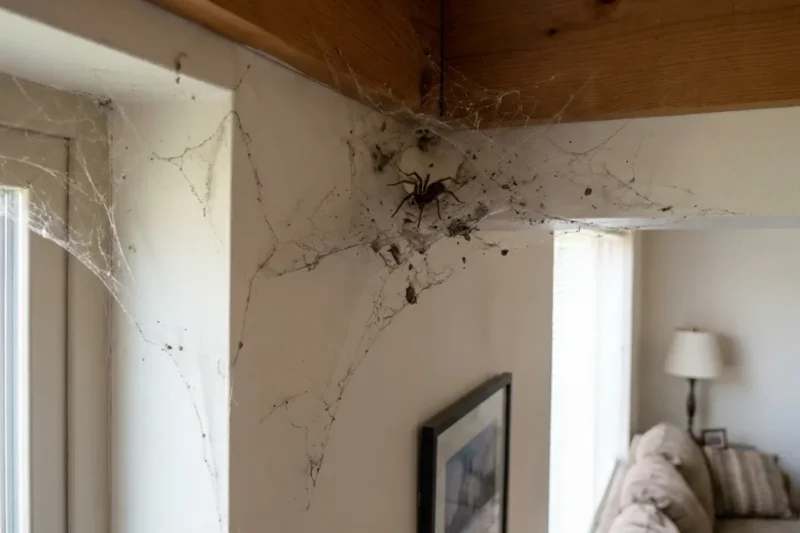
Spider Control
Web removal, treatment of harborage areas and fewer insects for spiders to feed on — usually part of recurring pest service.
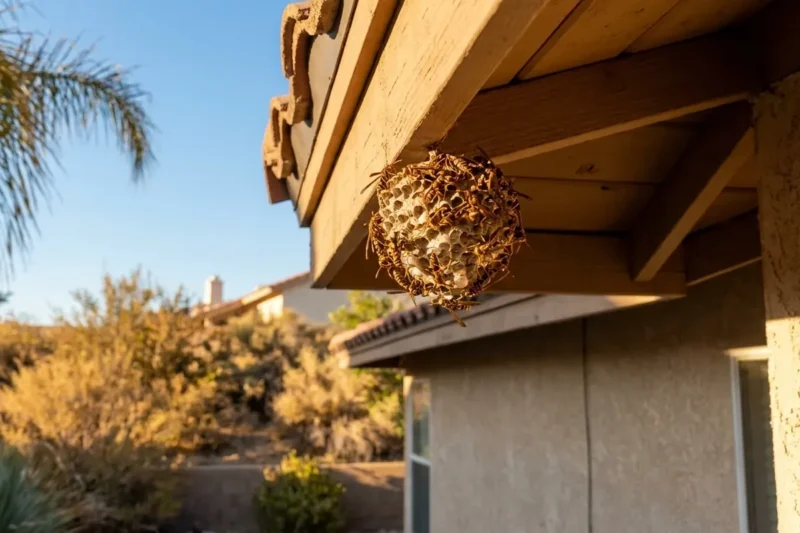
Paper wasps under the eaves and yellowjackets nesting in the ground or walls are common in Los Angeles yards, especially from late spring into fall. A nest near a doorway, play area or patio is worth dealing with — carefully. Before anything else, it’s important to know whether you’re looking at wasps or honey bees, because they’re handled very differently.
| Feature | Paper wasps | Yellowjackets | Honey bees |
|---|---|---|---|
| Look | Slender, long dangling legs, brown or yellow markings | Compact, bright yellow and black, shiny, fast | Fuzzy, golden-brown, rounder |
| Nest | Open, umbrella-shaped paper comb under eaves, railings, light fixtures | Enclosed paper nest, often hidden in the ground, walls, shrubs or attics | Wax comb, often inside walls, roofs, trees, meter boxes; or a temporary swarm cluster |
| Behavior | Defends nest if disturbed | Defends nest aggressively; scavenges food and drinks in late summer | Generally docile away from the hive; defends the colony |
If you’re not sure, stay back and describe what you see when you request service. A photo taken from a safe distance helps.
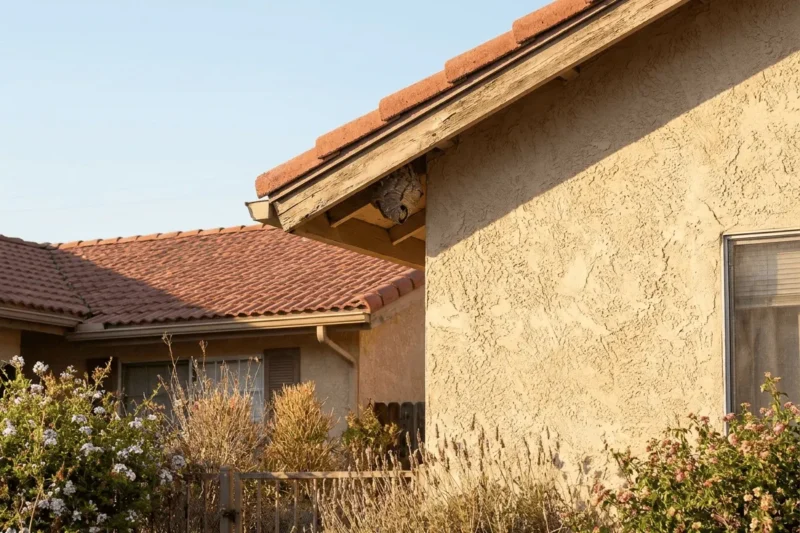
The technician assesses the species, nest size and location, then chooses a method. Exposed paper wasp nests can often be treated and removed in one visit. Yellowjacket nests hidden in the ground or in a wall void are typically treated at the entrance, sometimes with a return visit to confirm activity has stopped and to remove accessible nest material.
Timing matters: activity is lower in the early morning and evening, and treatment is often scheduled accordingly. Your provider will explain any precautions for the treated area.
Honey bees are valuable pollinators, and they aren’t interchangeable with wasps. Options depend on the situation:
We don’t arrange live bee relocation through this website. For established colonies or swarms, contact a local beekeeping association or a bee removal specialist. The Los Angeles County Agricultural Commissioner/Weights & Measures also publishes guidance on bees.
We don't recommend disturbing any active nest. Even small nests can produce multiple stings, and it's easy to misidentify a yellowjacket or bee nest.
No. Sealing the entrance can force them to find another way out — sometimes into the house. Leave the entrance open and request service.
Requests involving honey bees are directed toward beekeepers or bee removal specialists, who can assess whether live removal is possible.
Nests grow through spring and summer and are often largest in late summer and fall, when yellowjackets also start scavenging around food and trash.
Web removal, treatment of harborage areas and fewer insects for spiders to feed on — usually part of recurring pest service.
Monthly, every-other-month or quarterly visits that keep ants, spiders, roaches and other everyday pests from coming back.
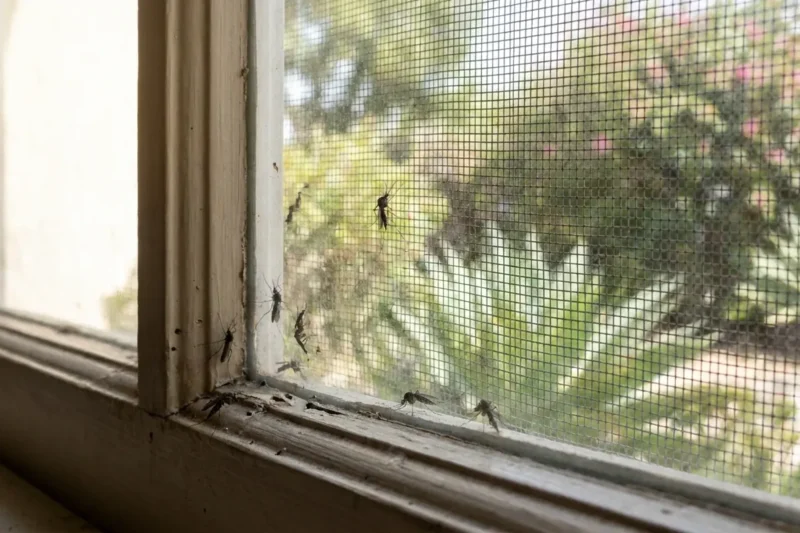
Private-property mosquito reduction: finding breeding sites, reducing standing water and targeted yard treatment.
We accept requests from the City of Los Angeles and nearby Los Angeles County cities. Availability is confirmed for each address.
Give us a call — we'll arrange an inspection and explain your options before any treatment.